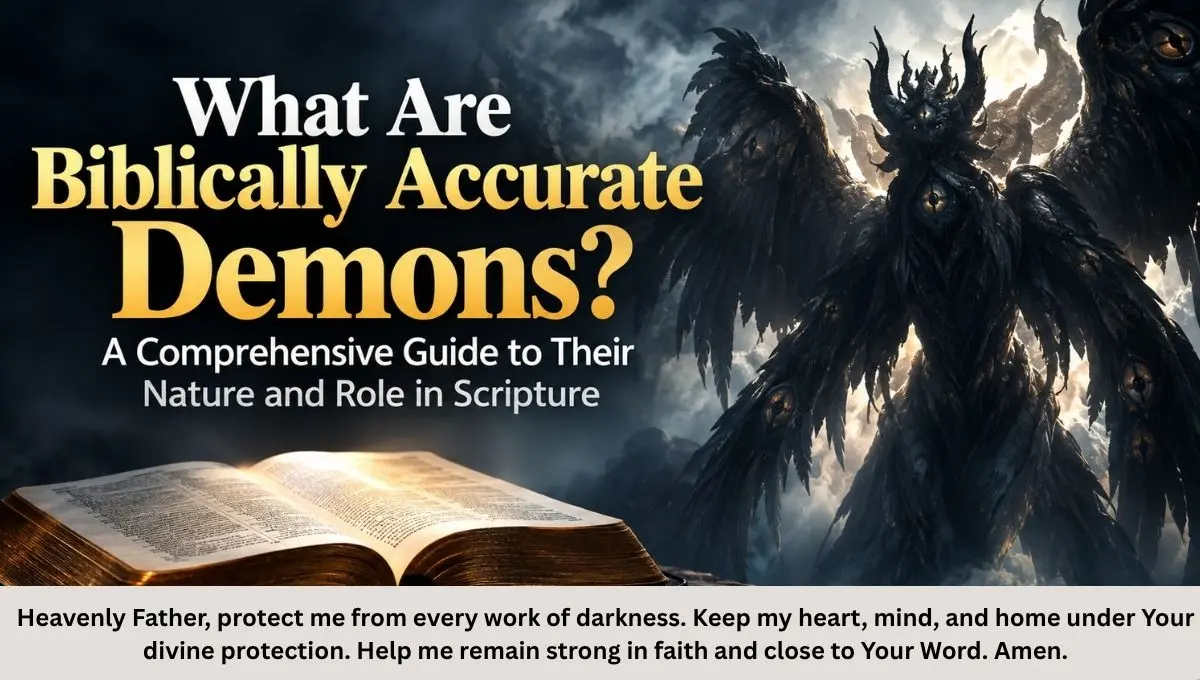
Biblically accurate demons challenge nearly every assumption pop culture has planted in our minds. Movies and folklore show red-skinned monsters with horns and pitchforks, but Scripture paints a very different picture, one far more subtle, and far less powerful than Hollywood suggests. The Bible describes demonic entities as fallen angels and unclean spirits, real spiritual adversaries with clear origins, defined limitations, and boundaries set by God Himself.
This guide uncovers what God’s Word actually teaches about demons: how they came to exist, what they can and cannot do, and the authority believers hold over them through Christ. Understanding biblically accurate demons replaces fear and fiction with truth, clarity, and confidence rooted in Scripture alone.
Understanding Biblical Terminology: Biblically Accurate Hebrew and Greek Words for Demons
Before identifying biblically accurate demons, it helps to know the original words writers used. The Bible never uses a single, uniform word for “demon” the way modern English does.
Hebrew Terms for Evil Spirits
The Old Testament describes evil spirits using several distinct Hebrew words, each carrying its own shade of meaning.
Hebrew Terminology for Demonic Entities
| Hebrew Term | Transliteration | Meaning | Example Reference |
| שֵׁד | shed | Demon, often linked to pagan sacrifice | Deuteronomy 32:17 |
| שָׂעִיר | sa’ir | Goat-demon or hairy one | Leviticus 17:7 |
| לִילִית | lilith | Night creature | Isaiah 34:14 |
| רוּחַ רָעָה | ruach ra’ah | Evil or distressing spirit | 1 Samuel 16:14 |
Greek Terms in the New Testament
The New Testament, written in Greek, uses more consistent language for demonic beings than the Old Testament does.
Key Greek Terminology:
- Daimonion (δαιμόνιον) the standard word for “demon,” used over 60 times.
- Pneuma akatharton (πνεῦμα ἀκάθαρτον) “unclean spirit,” common in the Gospels.
- Diabolos (διάβολος) “slanderer,” the title used for Satan.
- Angelos (ἄγγελος) “messenger,” applied to both holy and fallen angels.
Why This Linguistic Understanding Matters
Knowing the original terms prevents readers from importing folklore or movie imagery onto the text. Biblically accurate demons are defined by what these words describe, not by later artwork.
Complete Biblical Taxonomy of Demons and Evil Entities
Scripture describes several distinct categories of evil beings. Grouping them clarifies who does what and where each idea comes from.
Category 1: New Testament Demons (Unclean Spirits)
These are the demons most familiar from the Gospels spirits that possess or oppress people and are cast out by Jesus and His disciples.
Characteristics of New Testament Demons:
- Described as unclean or evil spirits, not physical monsters.
- Capable of entering and controlling a human body (Mark 5:1-13).
- Recognize Jesus’s authority and identity (Mark 1:24).
Can cause physical afflictions such as muteness or seizures (Matthew 9:32-33).
Category 2: Named Fallen Angels
A smaller group of angelic beings are named directly in canonical and near-canonical Jewish texts.
Named Fallen Angels in Scripture
| Name | Role | Key Reference |
| Satan | Chief adversary, tempter | Job 1:6-12 |
| Abaddon/Apollyon | Angel of the abyss | Revelation 9:11 |
| Azazel | Wilderness demon tied to the scapegoat | Leviticus 16:8 |
Category 3: Hebrew Demons of the Old Testament
The Old Testament references several demonic figures rooted in ancient Near Eastern folklore, absorbed into Hebrew warnings against idolatry.
Old Testament Demonic Entities
- Se’irim goat-demons worshipped in the wilderness (Leviticus 17:7).
- Lilith a night-dwelling creature mentioned in Isaiah’s judgment poetry.
- Shedim demons connected to child sacrifice (Psalm 106:37).
Category 4: Pagan Gods Presented as Demons
Biblical writers often reframed the gods of neighboring nations as demons rather than granting them any real divine status.
Pagan Deities Associated with Demons
| Deity | Culture | Biblical Treatment |
| Baal | Canaanite | Condemned as a false god (1 Kings 18) |
| Molech | Ammonite | Linked to child sacrifice (Leviticus 20:2-5) |
| Dagon | Philistine | Shown powerless before God (1 Samuel 5:1-4) |
Category 5: Chaos Monsters
Poetic and prophetic books describe massive chaos-creatures symbolizing evil and disorder rather than literal zoology.
Characteristics of Biblical Chaos Monsters:
- Leviathan a sea monster representing chaos (Job 41; Psalm 74:14).
- Rahab a symbol of chaos defeated by God (Isaiah 51:9).
- Behemoth an untamable land beast (Job 40:15-24).
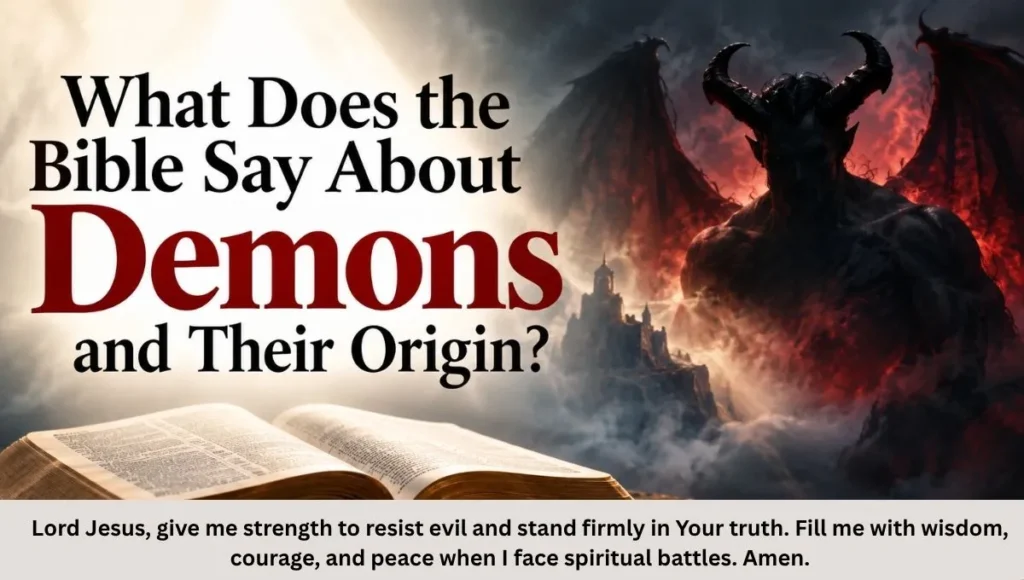
What Does the Bible Say About Demons and Their Origin?
Who Are Biblically Accurate Demons? Fallen Angels and Unclean Spirits Explained
Most theologians identify demons as fallen angels spiritual beings who rebelled against God alongside Satan. Scripture calls them unclean spirits because of their opposition to holiness, not because of any grotesque appearance.
How Did Demons Originate According to the Bible? Satan’s Rebellion and the Fall
Passages such as Isaiah 14:12-15 and Ezekiel 28:12-17 are traditionally read as describing a heavenly rebellion led by a proud angelic being. Revelation 12:4 pictures a third of the angels joining this fall.
This rebellion, not a separate creation event, is the accepted biblical explanation for how demons came to exist.
Read Also: 40+ Beautiful Bible Verse About Flowers and Faith
Biblically Accurate Understanding of Ambiguous Entities and Satan
Category 6: Ambiguous Entities
Some biblical figures don’t fit neatly into “angel” or “demon.” Destroying angels, for instance, carry out God’s judgment yet appear fearsome.
Characteristics of Destroying Angels:
- Sent directly by God, not rebellious spirits (2 Samuel 24:16).
- Execute judgment rather than random evil (Exodus 12:23).
- Their moral status differs sharply from demons proper.
Category 7: Satan – Prince of Demons
Satan holds a unique position as the leader referenced across both Testaments under multiple titles.
Satan’s Names and Titles
| Title | Meaning | Reference |
| Satan | Adversary | 1 Chronicles 21:1 |
| Devil (Diabolos) | Slanderer | Matthew 4:1 |
| Prince of this world | Worldly ruler | John 12:31 |
| Father of lies | Source of deception | John 8:44 |
Satan’s Origin and Fall
Satan is widely understood as a created angelic being who fell through pride, later becoming the accuser and tempter described throughout Scripture.
Satan’s Nature and Limitations
Despite his influence, Satan is not equal to God. He is a created being operating within limits God sets.
Satan’s Limitations as a Created Being:
- Not omniscient he cannot know everything (Job 1:7).
- Not omnipresent he cannot be everywhere at once.
- Not omnipotent his power is permitted, not unlimited (Job 1:12).
- Subject to God’s ultimate authority and future judgment (Revelation 20:10).
The Two Physical Descriptions in Scripture
The Bible gives almost no physical description of demons. Only a couple of passages hint at appearance, and both are symbolic rather than literal.
Biblical Physical Descriptions of Demons
- Revelation 9:7-10 locust-like creatures with human faces and scorpion tails, in a highly symbolic vision.
- 2 Corinthians 11:14 Satan disguised as “an angel of light,” stressing deception over horror.
How Christian Demonology Developed Through Extrabiblical Sources
Much of today’s popular imagery of demons comes not from the Bible but from centuries of extrabiblical writing and art.
The Book of Enoch’s Massive Influence
The non-canonical Book of Enoch expanded heavily on fallen angels called Watchers, shaping later Jewish and Christian demonology.
Enochian Contributions to Demonology
- Introduced detailed Watcher narratives and named leaders like Semjaza.
- Linked demons to the offspring of angels and human women (the Nephilim).
- Influenced Jude 1:6, which references angels who “did not keep their positions of authority.”
Church Fathers’ Interpretive Contributions
Early theologians systematized scattered biblical references into organized doctrine about Satan and demons.
Key Theological Developments:
- Origen and Augustine linked Isaiah 14 and Ezekiel 28 directly to Satan’s fall.
- Augustine’s “City of God” framed demons as spiritual enemies of the Church.
- Church councils affirmed demons as fallen angels, not mythological creatures.
Medieval Demonology’s Elaborations
Medieval writers built demon hierarchies, names, and ranks that appear nowhere in Scripture, feeding directly into later folklore and art.
Literary Influence: Dante and Milton
Dante’s “Inferno” and Milton’s “Paradise Lost” gave demons vivid personalities and physical forms that most people now assume are biblical.
Why This Historical Context Matters
Separating Scripture from centuries of literary invention is essential to understanding biblically accurate demons rather than cultural ones.
How Do Demons Influence and Oppress According to Biblical Accounts?
What Is Demon Possession and Oppression in the Bible? Signs and Examples
The Gospels describe possession as demons directly controlling a person’s body, causing symptoms like convulsions, muteness, or self-harm (Mark 9:17-22).
How Do Demons Use Deception and False Teachings? Biblical Warnings and Idolatry Connections
Paul warns that idolatry involves worship offered to demons, not merely lifeless idols (1 Corinthians 10:20). Deception through false teaching is another primary demonic tactic (1 Timothy 4:1).
Distinguishing Demonic Possession from Oppression in Biblically Accurate Terms
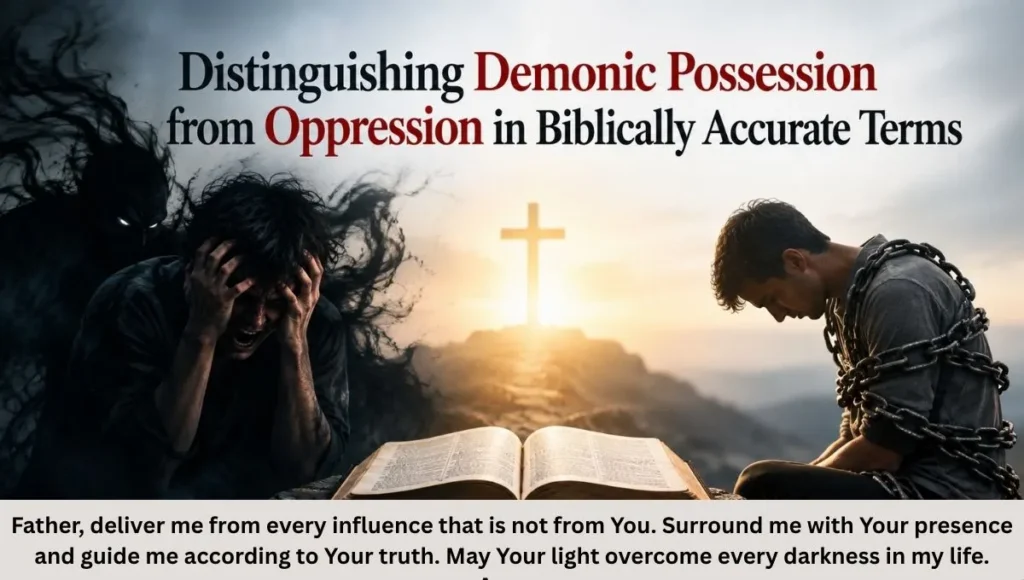
Defining Possession vs. Oppression
Possession implies direct internal control; oppression describes external pressure, temptation, or harassment.
Possession vs. Oppression Comparison
| Aspect | Possession | Oppression |
| Control | Internal, direct | External, indirect |
| Biblical Example | Mark 5:1-13 | Job 1-2 |
| Who Is Affected | Unbelievers in Gospel accounts | Believers and unbelievers alike |
Can Christians Be Possessed?
Most theologians argue no, based on the indwelling of the Holy Spirit in believers.
Biblical Foundations Against Christian Possession:
- 1 Corinthians 6:19 believers’ bodies are a temple of the Holy Spirit.
- 2 Corinthians 6:14-16 light and darkness cannot coexist.
- 1 John 4:4 “greater is He who is in you.”
Can Christians Be Oppressed?
Yes. Scripture shows believers facing temptation, spiritual attack, and harassment even while remaining secure in faith (Ephesians 6:12).
Forms of Demonic Oppression Against Believers
Categories of Demonic Oppression
- Persistent temptation toward specific sins.
- Doubt and discouragement attacking faith.
- Deceptive teaching that distorts truth.
- Fear and anxiety used to paralyze action.
Protection and Response for Believers
James 4:7 instructs believers to submit to God and resist the devil, with the promise that he will flee.
Read Also: Biblically Accurate God: Revealing the True Glory Beyond Human Imagination
Clarifying Contemporary Misunderstandings: Pop Culture vs. Biblical Truth
Pop Culture vs. Biblical Demon Depictions
| Element | Pop Culture | Scripture |
| Appearance | Red skin, horns, tail | Rarely described; often disguised |
| Home | Fire and brimstone pit | Currently active on earth (1 Peter 5:8) |
| Weakness | Holy water, crosses | Christ’s authority and prayer |
Power Level: Exaggeration vs. Reality
Biblical Limitations on Demonic Power:
- Cannot override human free will.
- Cannot defeat God’s power (1 John 4:4).
- Operate only within limits God permits (Job 1:12).
Demonic Possession: Hollywood vs. Scripture
Films exaggerate possession for shock value, while biblical accounts focus on Jesus’s authority and swift deliverance rather than prolonged horror.
Satan’s Role: Misconceptions Clarified
Correcting Satan’s Role Misunderstandings:
- Satan does not rule hell; hell is his future punishment (Revelation 20:10).
- Satan is not God’s equal opposite; he is a created being.
- Satan cannot read minds or know the future perfectly.
Why These Misunderstandings Matter
Accurate understanding shapes how believers respond to spiritual warfare with confidence in Christ rather than fear of fiction.
How Can Young Christians Recognize and Resist Demonic Influence?
What Are the Biblical Signs of Demonic Influence and Temptation?
Persistent sinful patterns, drawn-out doubt about God’s character, and sudden interest in occult practices are commonly cited warning signs (1 Peter 5:8).
How Can Prayer, Bible Study, and Community Help in Spiritual Warfare?
Consistent prayer, Scripture study, and accountability within a church community are the primary biblical defenses against spiritual attack (Ephesians 6:18).
Read Also: 296+ Best Bible Verse Wallpaper Black Dark Aesthetic Scripture Backgrounds for Phone & Desktop
Spiritual Warfare: Practical Protection and Authority
The Reality of Spiritual Warfare
Paul describes the Christian life as an ongoing struggle “against the spiritual forces of evil” rather than against people (Ephesians 6:12).
The Armor of God (Ephesians 6:13-18)
Components of Spiritual Armor
| Armor Piece | Represents |
| Belt of truth | Honesty and integrity |
| Breastplate of righteousness | Right standing through Christ |
| Shoes of the gospel | Readiness to share peace |
| Shield of faith | Trust that stops temptation |
| Helmet of salvation | Assurance of salvation |
| Sword of the Spirit | God’s Word |
Authority Over Demons
Exercising Spiritual Authority:
- Believers are given authority in Christ’s name (Luke 10:17-19).
- Authority rests on Christ’s power, not personal ability.
- Used for deliverance and protection, not display.
Resisting Satan’s Schemes
James 4:7 pairs submission to God with active resistance, promising that Satan will flee when confronted in faith.
Closing Open Doors
Demonic Footholds and Solutions
- Unresolved anger addressed through forgiveness (Ephesians 4:26-27).
- Occult involvement addressed through renunciation and repentance.
- Persistent sin patterns addressed through confession and accountability.
Understanding Biblically Accurate Demons: A Summary
Biblically accurate demons are fallen angels and unclean spirits, not horned monsters from folklore. They oppose God, tempt and oppress people, yet remain limited, created beings under God’s ultimate authority.
Scripture, not centuries of art and literature, remains the clearest source for understanding who and what demons truly are.
Frequently Asked Questions
What does a biblically accurate devil look like?
Scripture gives no physical description; 2 Corinthians 11:14 says Satan can appear as “an angel of light,” emphasizing deception over monstrous looks.
What do biblically accurate demons and angels look like?
Both are spiritual beings without fixed physical form; when angels appear, they often look human (Genesis 18:2), while demons are rarely described at all.
What do biblically accurate demons look like?
The Bible offers almost no visual detail, aside from symbolic locust-like imagery in Revelation 9:7-10, which is not meant literally.
What are the names of biblically accurate demons?
Named figures include Satan, Abaddon/Apollyon (Revelation 9:11), Azazel (Leviticus 16:8), and Legion, a self-identified group of spirits (Mark 5:9).
Are biblically accurate demons beautiful?
Some can appear attractive or radiant to deceive, as Satan does disguised as “an angel of light” in 2 Corinthians 11:14.
What does biblically accurate Jesus look like?
Isaiah 53:2 suggests an ordinary appearance with “no beauty that we should desire him,” contrasting sharply with idealized art.
What is the list of demons mentioned in the Bible?
Key entities include Satan, Abaddon, Azazel, Lilith, the Se’irim, Shedim, Legion, and chaos figures like Leviathan and Rahab.
How many times are demons mentioned in the Bible?
The Greek term “daimonion” alone appears over 60 times in the New Testament, with additional Hebrew terms referenced across the Old Testament.
Conclusion
Understanding biblically accurate demons means returning to Hebrew and Greek Scripture rather than film and folklore. They are fallen, limited, created beings real, but never a match for God’s authority.
For believers, this knowledge replaces fear with confidence, grounded in Christ’s power over every spiritual force described in the Bible.

Abdul Mannan Haider is a content writer at [InspiredMsg.com], specializing in Messages and Prayers. With 5 years of experience, he creates meaningful, engaging, and easy-to-read content that connects with readers.